
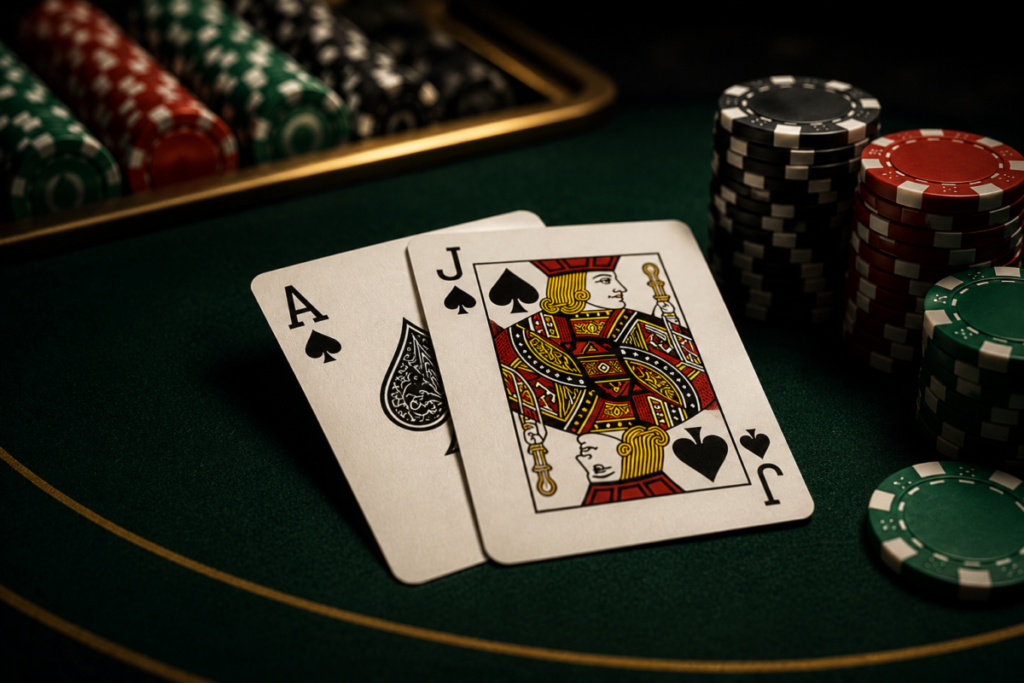
 Some casino games seem almost immune to time. Roulette still looks like roulette, blackjack still comes down to cards, totals and a few familiar decisions. Even slot machines, after decades of visual changes, are built around the same basic idea of spinning symbols and waiting to see where they land. More complicated games come and go much faster.
That does not automatically make any simple casino games better, but it does raise an interesting question: When players return to the same formats year after year, is that because those games are familiar, or simply just because the simple mechanics are simply easier to keep relevant? The answer is probably a little bit of both.
Familiarity Has Real Value and Simple Rules Are Easier to Carry
Players also tend to like knowing roughly what they are getting into, but that does not mean everyone wants the same thing, but there is a reason old casino formats keep appearing on modern platforms. They require less explanation, and the player can move straight into the game smoothly and easily.
Modern operators benefit from that familiarity. On online casino apps and sites, such as bet way, classic casino games can be listed beside newer digital formats without feeling out of place because players already understand the basic language of cards, wheels, reels and familiar table layouts.
An online casino like betway does not need to reinvent blackjack for blackjack to remain useful in a game lobby. The game already brings its own history with it, and that is a powerful advantage.
A game does not need to be basic to be easy to understand, but the strongest casino formats usually explain themselves quickly. Roulette is a good example. The wheel turns, the ball lands and the result is visible immediately.
Those rules have survived because they do not depend on one particular piece of technology, as the same game can exist on a physical table, a desktop screen or a phone without needing to be rebuilt from scratch. A game tied too closely to one visual trend, one device or one short-lived feature can start feeling dated as soon as the technology around it changes. That portability may matter more than it might seem.
Old Games Leave Room for New Presentation
One reason traditional casino games have survived so well is that developers can change the surface without changing the game underneath.
Roulette can be presented with a realistic live dealer, a clean digital wheel or a more stylised interface. Blackjack can be formal, casual or almost minimalist. The rules remain familiar either way. That flexibility gives designers room to modernise.
Complicated Games Can Still Last if the Core Is Strong
Of course, not every complex game disappears. Some survive because the central mechanic is strong enough to support all the extra features around it.
Poker is an obvious example. The rules are more involved than roulette, but the game has survived for generations because the complexity comes from player decisions rather than decorative systems. That is an important difference.
Complexity that comes from strategy can age well. Complexity that comes from layers of menus, bonus triggers and visual effects is more vulnerable because those elements are tied to design trends. The core needs to remain interesting even after the novelty wears off.
Retro casino games benefit from nostalgia, especially online. Players recognise the sounds, layouts and visual cues from older casinos, films and family memories. A game still has to be easy to play. If roulette had become awkward or confusing on mobile, nostalgia alone would not keep it relevant. The same applies to blackjack or simple reel slots.
Simplicity Gives a Game More Room to Survive
Simple casino games do seem to age better, but not because players are afraid of complexity. They age better because they are easier to move from one generation of technology to the next one.
The rules remain clear, the interface can be refreshed and the game can adapt without losing its identity. That does not mean the future belongs only to roulette, blackjack and straightforward slots. New formats will keep appearing, and some of them will survive for decades too.
The ones most likely to last will probably have one thing in common with the old classics. Underneath all the graphics and technology, there will be a simple idea that still makes sense when everything else around it changes.
 Aviator is easy to understand. That is not the hard part. The plane takes off. The number goes up. You cash out before it disappears. Anyone can get that after one round. The harder part is what happens after you understand it. You start thinking you can feel the right second. You leave, then the number keeps climbing. You wait, then the plane vanishes. The game is not complicated, but it is very good at making a simple decision feel irritating. That is probably why it caught on.
The Round Starts Before You Overthink It
Aviator does not give the player much to study. There is no long setup, no table full of markets, no reels, no cards, no dealer talking through the hand. The game starts and the decision arrives quickly. That makes it different from many online casino games. A slot has its symbols and sounds. Roulette has the wheel. Blackjack has the cards. Aviator bet is almost bare by comparison, but that is the point. The screen leaves very little between the player and the choice. Do you take what is there, or do you wait?
Leaving Can Feel Like Losing
This is the strange part. A player can cash out and still feel annoyed. The round continues without him, the number climbs higher, and suddenly the good decision does not feel good anymore. Nothing was taken away. He left in time. Still, the screen shows what could have happened. That is what makes Aviator sharp. It lets the player watch the version of the round he missed. A lot of casino games hide that feeling. Aviator puts it right in front of you.
Waiting Has Its Own Problem
Of course, waiting too long is worse. The multiplier climbs and the player tells himself to wait one more second. Then one more. Then the plane is gone. No big ending. No slow reveal. Just over. That quick cut is why Aviator works. The game looks calm, but the ending can be sudden. There is always a point where patience turns into a mistake, and nobody knows where that point is until it has already passed.
The Old Results Start To Look Like Clues
After a few rounds, players naturally start looking at the history. Short round, short round, longer round. Maybe another long one is coming. Or maybe not. A big multiplier just landed, so maybe the next one will crash early. Or maybe it will not. That is the trap. Aviator can make old results feel meaningful even when they should not be treated like a guide. It is not sports betting. There is no form, no lineup, no injury, no weak defence, no weather. The last round is not whispering anything about the next one. It just feels like it is.
Why The Game Stays In The Lobby
Aviator stays around because it is easy to remember. Plane. Number. Cash out. That is more than many new casino games manage. Some arrive with bigger graphics and longer features, but after a week they are just another tile in the lobby. Aviator has one idea, and the idea is clean enough to stick.It is not really about flying. It is not even really about the plane. It is about that small, annoying second where leaving feels wrong and staying feels dangerous.
 Some casino games just stick around. You keep seeing them, sometimes with a new look, sometimes almost the same as before, and people still open them without thinking much about it. Others show up, get a bit of attention, then slowly fade out. No clear moment where it happens, just less presence over time.
You start to notice it when scrolling through a modern casino lobby on a site like betway, where older slot-style games sit next to newer ones. Even with all the extra features around them, those simpler games don’t really lose their place. It’s not only nostalgia. It’s more about how they sit inside the platform itself.
Simple loops don’t really get old
A lot of older retro games are built around small loops. You start, something happens, then it resets. That’s it. Slot games show this best. You don’t need to prepare, and you don’t need to think too far ahead.
That kind of structure tends to hold up. It doesn’t depend much on trends. It just works in the same way each time.
When games get more layered, things shift a bit. Extra features can feel interesting at first, but over time they can slow the flow, especially if you’re moving between games quickly.
The tech doesn’t need to stretch
Another part of it is how these games run on modern systems. Retro and older-style games usually rely on lighter tech. They don’t need large files or constant updates to stay usable.
That makes them easier to load and easier to keep stable. Platforms can cache parts of them, preload what’s needed, and keep them running across devices without changing much.
Newer games sometimes need more from the system. More visuals, more layers, more things happening at once. That can make them feel heavier over time.
Familiar shapes make it easier to come back
There’s also the recognition side. People don’t always want to learn something again from the start. If a game looks familiar, it’s easier to return to it without thinking too much.
Classic table games work the same way. Blackjack still looks like blackjack. Roulette still looks like roulette. The structure doesn’t move around much.
Once that structure shifts too far, even slightly, it can feel unfamiliar enough to slow things down.
Some games just lose their moment
Not every game is built to last. Some are tied to a specific idea that works for a while, then becomes less noticeable once similar versions show up.
That’s usually when they start to fade. Not because they stop working, just because they stop standing out.
Why the older ones stay
The games that stay visible tend to rely less on standout features and more on how they move. They are easy to enter, easy to repeat, and they don’t interrupt the flow of the platform.
That’s where the tech matters again. If a game fits into the system without needing constant changes, it’s easier to keep around.
After a while, it becomes obvious. It’s not really about age. It’s about whether the game still fits how people move through a platform now.
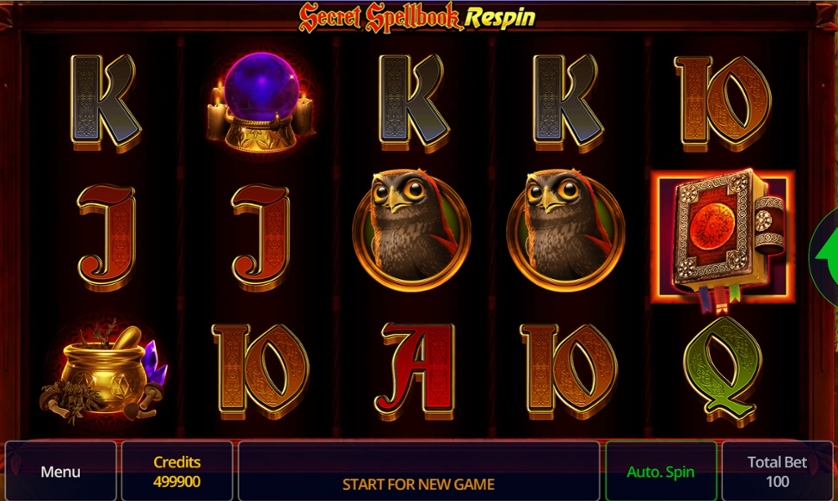 Secret Spellbook Respin is a slot game developed by Swintt, a game provider in the online gambling industry. It is a fantasy-themed game that features a respin feature where players can respin individual reels to increase their chances of hitting a winning combination.
With a maximum win of 5,000 x bet, this 5×3 slot is packed with exciting features, including Free Spins, Lucky Symbols, and Respins.
As well as witches, owls, and crystal balls, the game has a variety of iconic symbols. Players will certainly be drawn to these beautiful symbols. Secret Spellbook Respin offers players a fun and engaging experience with its magical theme and exciting features.
Discover what’s in store with Secret Spellbook Respin if you look into the crystal ball.
Featuring a 5×3 game field and 10 fixed paylines, Secret Spellbook Re-Spin is a very easy-to-play slot. Furthermore, Secret Spellbook Re-Spin’s interface is simple, and with only a few simple bonus features, you won’t have trouble learning how to play.
Secret Spellbook Respin Slot Bonus Features
Free Spins
When three or more Scatter symbols appear on reels, 10 Free Spins feature will be triggered. The scatter symbol is also wild. A retrigger can also be triggered during this feature.
A lucky symbol will be randomly chosen, and when it lands on a reel, it will expand to cover the whole reel.
Respin Feature
Activating the Respin feature will double your total bet, but you will also activate the Respin feature, which will be triggered whenever two Scatter symbols appear. Also, the feature will be retriggered if you land on at least one Scatter during the second round.
Conclusion
We found this slot to be very similar to the “Book of” slots as it seems to work off the same concept with the random symbol and expanding symbol. It is an enjoyable slot though and it kept us entertained for hours.